Driver vocabulary

Road terms in plain English

Short explanations for words that can be confusing if you are new to driving or learning in a second language.

Preview: 6 of 33 terms

Paid users unlock 27 more terms

Includes road layout, parking, signs, vehicle control, and safety vocabulary.

Sign in
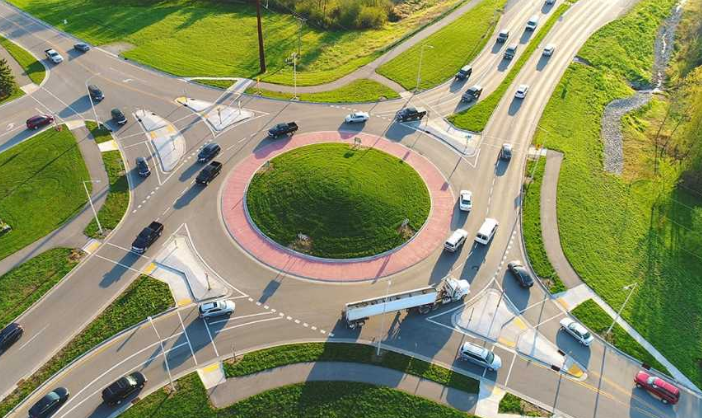
Aerial view of a real traffic roundabout with cars circulating around a center island

Roundabout

Road Layout

A circular intersection where traffic moves around a center island, usually counterclockwise in the U.S.

Why it matters: You usually slow down, yield to traffic already inside, then enter when there is a safe gap.

Example: If a car is already coming around from your left, wait before entering.
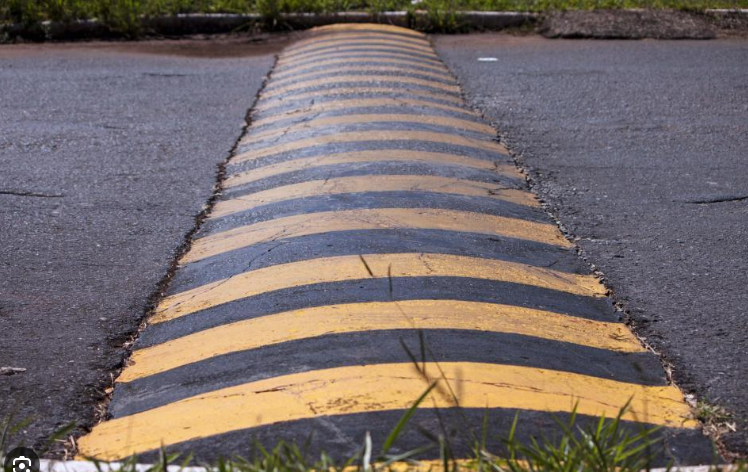
Real striped speed bump raised across a road

Speed bump

Road Layout

A raised part of the road that makes drivers slow down.

Why it matters: Going too fast over one can damage the car, surprise passengers, or make you lose control.

Example: In a parking lot, brake before the bump, then roll over it slowly.

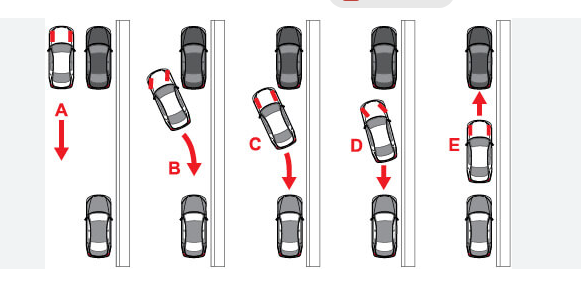
Step-by-step parallel parking diagram showing car positions A through E

Parallel parking

Parking

Parking in line with the curb, usually between two cars, with your vehicle facing the same direction as traffic.

Why it matters: The DMV may ask about curb distance, wheel direction on hills, and safe backing.

Example: Signal, pull beside the front car, back in slowly, then straighten near the curb.

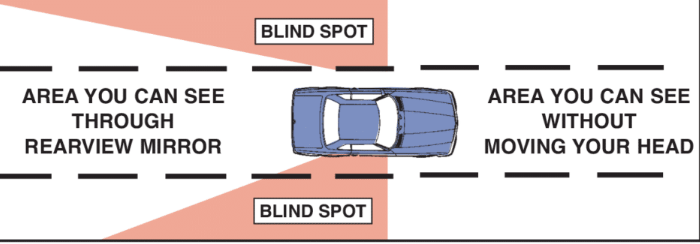
Diagram showing areas visible in mirrors and blind spots that require moving your head

Blind spot

Safety

An area beside or behind your car that mirrors may not show clearly.

Why it matters: A car, motorcycle, or bicyclist can hide there, so you need a quick shoulder check.

Example: Before changing lanes, check mirrors, signal, then glance over your shoulder.

Right-of-way

Safety

The rule for who should go first when drivers, pedestrians, or bicyclists might cross paths.

Why it matters: Many crashes happen when someone assumes they can go first. When unsure, slow down and yield.

Example: At a four-way stop, the driver who stopped first usually goes first.

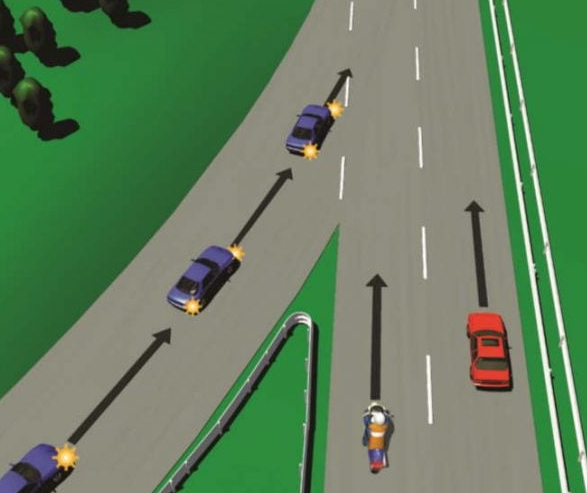
Traffic entering a main road from a merging lane with arrows showing direction

Merge

Vehicle Control

Joining a lane of traffic, usually from an entrance ramp or from a lane that is ending.

Why it matters: You need to match traffic speed and find a safe gap without forcing others to brake hard.

Example: On a freeway ramp, accelerate smoothly, signal, check the gap, then enter.

27 terms hidden in preview

The full glossary keeps going with words like median, hydroplaning, no-zone, work zone, school zone, and U-turn.